News &
blog posts
Clinical achievements, research milestones, press coverage and treatment advances from the Urology Partners consultant team.
Woking urologist urges patients not to let embarrassment delay seeking medical help
Neil Barber spoke to the Woking Mail to raise awareness for men to seek medical help rather than ignoring symptoms which may cause embarrassment.
Read full article
How to access private urology care in the UK: a reassuring guide from Urology Partners
Everything you need to know about self-pay, private medical insurance and seeing a private urologist with confidence.
If you are worried ab...
Prostate Cancer treatment: New study on Focal Therapy cuts risks of side affects
A major new 10-year study, led by Imperial College...

Prostate Cancer Screening: Where Are We Now?
Prostate cancer is one of the most common cancers affecting men. The PSA blood test can help detect cancer early when a potentially fatal pr...
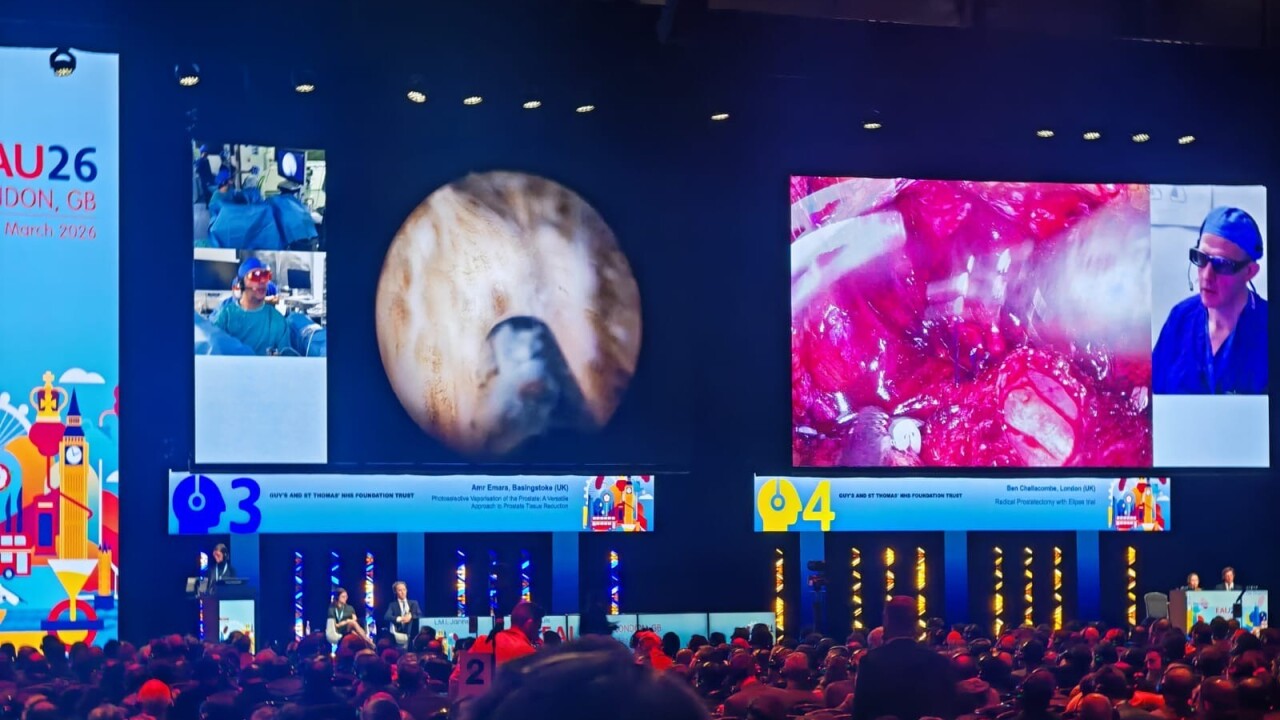
Our Consultant Surgeons Shine at EAU Annual Congress 2026
Our Consultant Surgeons Shine at EAU Annual Congress 2026
We are proud to report on the outstanding contribution from our consultant sur...
The "Game-changer" iTIND procedure
An enlarged prostate doesn't just affect older men. This patient story shares the experience of a much younger man who has found having the...
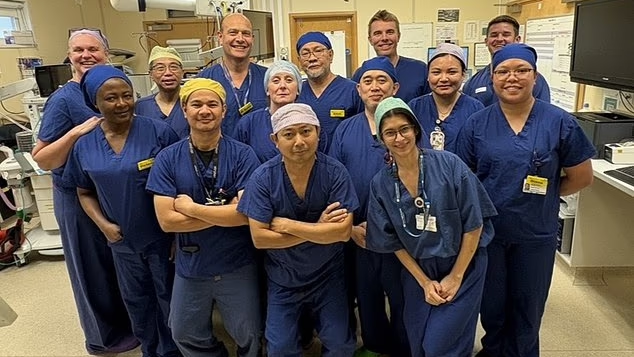
Reducing NHS waiting lists for men with Aquablation Therapy at Frimley Health Foundation Trust
Neil Barber has led the introduction of Aquablation therapy in the UK to treat men with an enlarged prostate which can hugely impact their e...
'I woke up seven times a night to go the loo and feared going out. I had a prostate condition most men don’t know about.'
iTIND is the latest in the range of minimally invasive treatments for men suffering from BPH. Richard Hindley's patient shares his story and...
Urologist explains why men need toilet at night, and it's not cancer
Richard Hindley goes through the common symptoms of an enlarged prostate (BPH) and the need for men to talk about it and share experiences a...
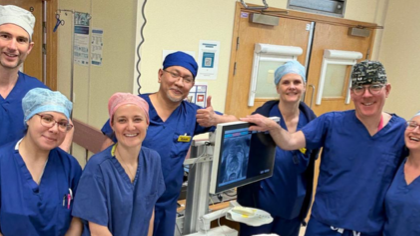
Simon Bott is the first in the UK to use AI assistance for Prostate Biopsy Results
With AI developing at such a pace, it was exciting to see it in action last week as part of prostate cancer diagnosis and the reporting of b...
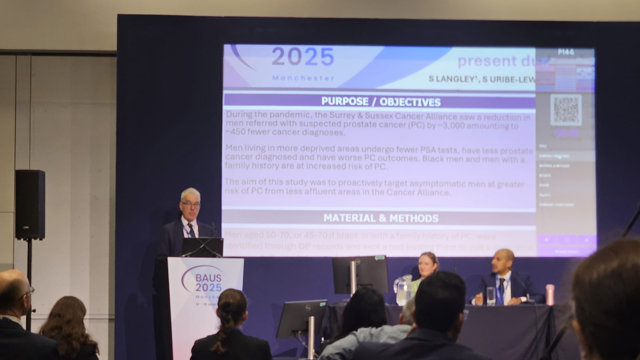
Targeted Prostate Health Check Programme - The Results
Screening for Prostate Cancer is an ever present topic, so it was great to have Simon Bott presenting at British Association of Urology Surg...
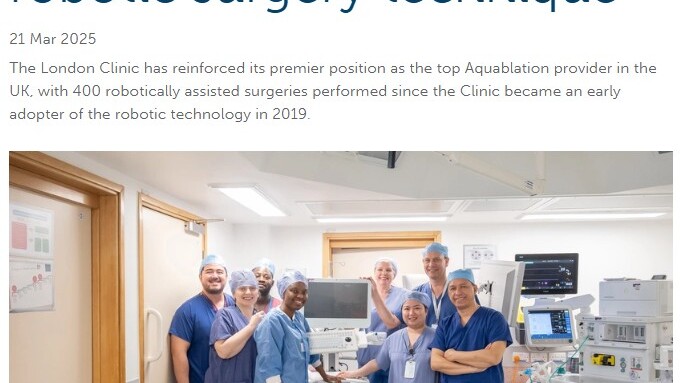
Aquablation milestone at The London Clinic
Neil Barber and the wonderful team at The London Clinic have now reached a brilliant milestone of treating 400 patients with Aquablation tre...

Don't ignore the troublesome waterwork symptoms that could indicate an enlarged prostate
Ignoring the symptoms of an enlarged prostate is a common issue with men. Neil Barber speaks to ITV Meridian about the need to check in with...
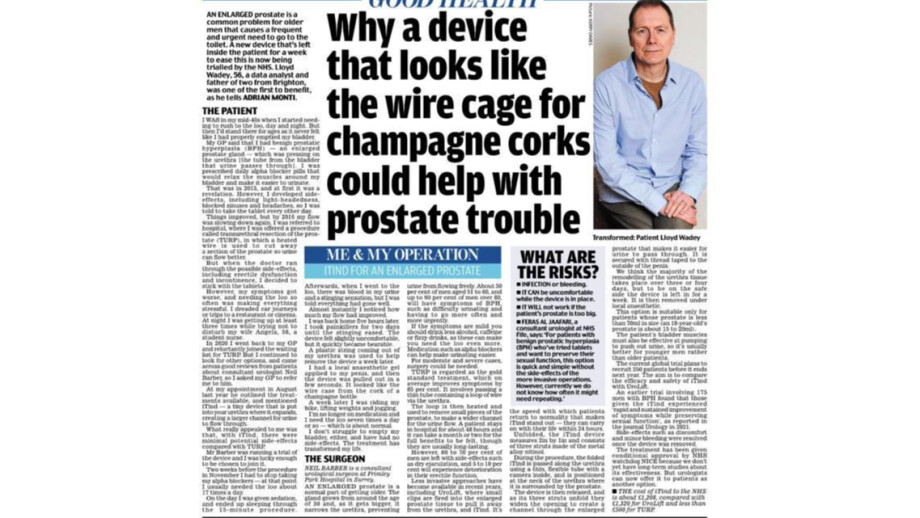
The "Champagne Cork" procedure for BPH
The Daily Mail's regular "Me and My Operation" feature recently covered the iTIND procedure. This article follow's a patient story with Neil...
Neil Barber and Richard Hindley discuss the iTIND procedure on BBC Radio Surrey
Listen to Neil Barber and Richard Hindley discussing the latest news on treatment options for men with BPH - the iTIND treatment is the late...
Neil Barber chats on Gateway FM on the iTIND procedure for BPH
Spreading the news on iTIND treatment for BPH, Neil Barber chats on Radio Gateway about it's development and the patient's the treatment is...
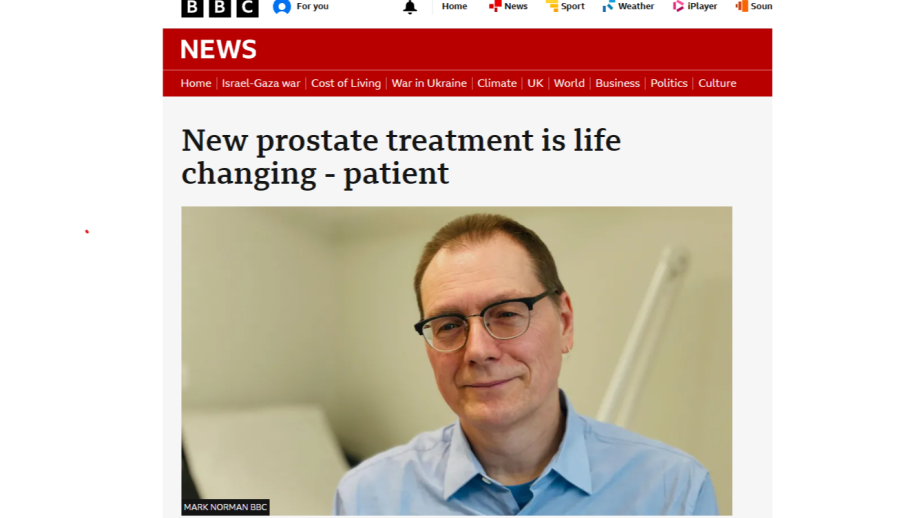
iTIND - the new prostate treatment changing men's lives - news from BBC South East
Offering our patient's a range of treatment options for their condition and symptoms is key to offering patient choice and there is no "one...

5 year data for Water Vapour therapy - Richard Hindley discusses on podcast from Boston Scientific
Richard Hindley joined Dr Francesa Cum on a podcast with Boston Scientific to discuss his experience with the Rezum treatment for BPH and th...
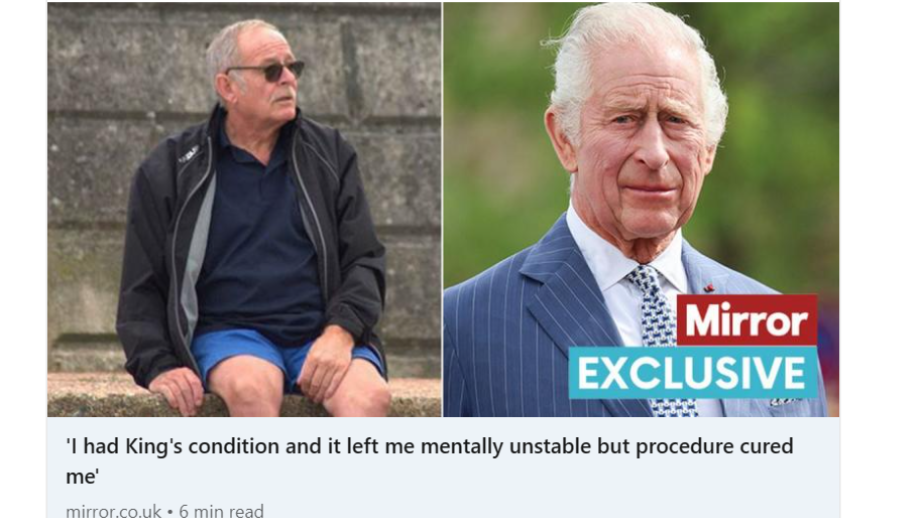
'I had enlarged prostate like King Charles and was in excruciating pain but procedure cured me'
As the interest in treatments available for an enlarged prostate continues to rise following the news of King Charles's upcoming treatment,...
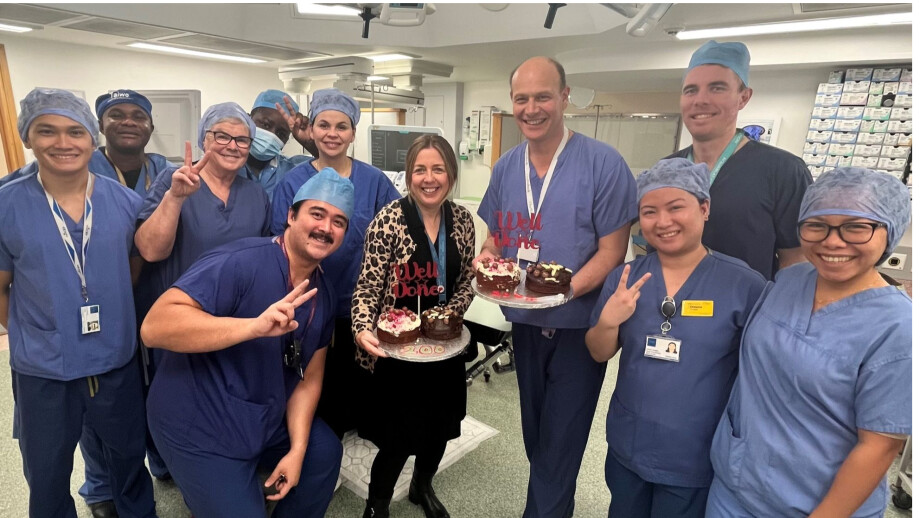
Neil Barber completes his 200th Aquablation Procedure at The London Clinic
Whilst Neil Barber has been leading the way introducing Aquablation to the UK through his private practice at The Parkside Suite, Frimley Pa...

Keeping your prostate healthy
Neil Barber shares his experience treating men with an enlarged prostate and what you can do to help alleviate and even prevent troublesome...

Reactions to King Charles undergoing surgery for an enlarged prostate
Raising awareness of the impact of an enlarged prostate has received a huge boost with the latest news of King Charles's upcoming surgery fo...

Daily Mail features Aquablation and NICE guidance for standard procedure guidelines on the NHS
Neil Barber and his patient feature in The Daily Mail article on Aquablation therapy for treating Benign Prostatic Hyperplasia.
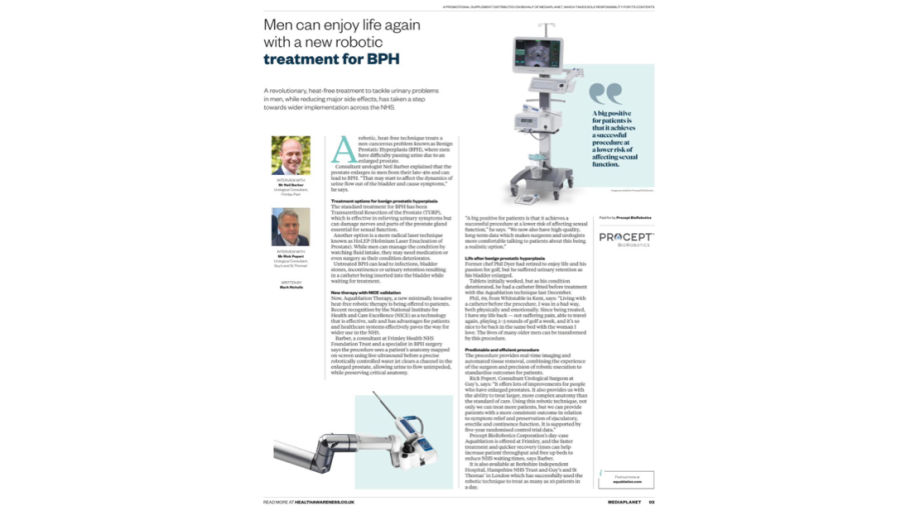
Men can enjoy life again with a new robotic treatment for BPH
Health Awareness covers the development of Aquablation therapy for BPH featuring comments from Neil Barber and a patient story.

Safety of Aquablation for patients using blood thinnners
Neil Barber is co- author of new publication confirming safety of Aquablation of the prostate in those men who are taking blood thinners - t...
NICE approve Aquablation as a standard procedure across the NHS to treat BPH
We are delighted that NICE has now published it's guidance made on evidence based recommendations that Aquablation should be offered on the...

Getting it right first time (GIRFT) and rethinking the treatments for BPH
As the NHS continues to work on "Getting it right first time" (GIRFT), Richard Hindley and his colleagues from the GIRFT academy, share insi...
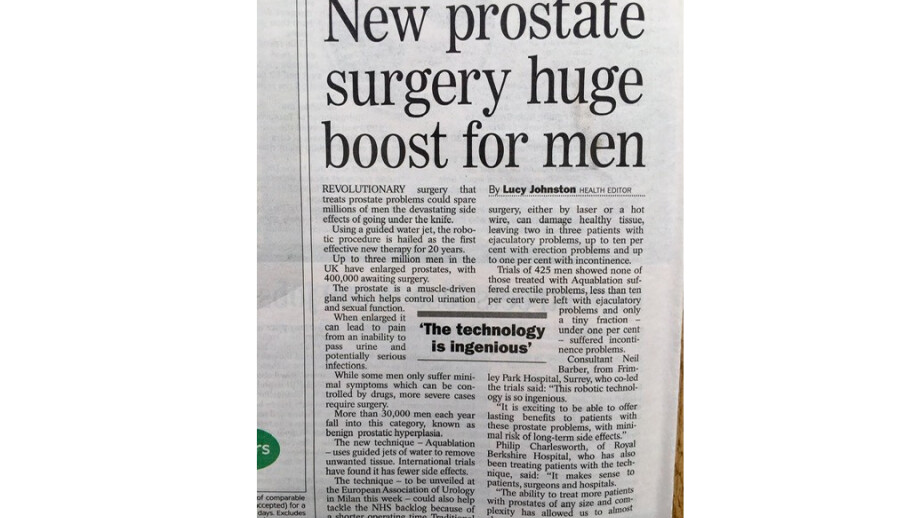
New robot prostate surgery could spell relief for thousands of men
While the European Assoication of Urology (EAU) kicks off it's annual conference in Milan, which features semi live demonstrations of Aquabl...
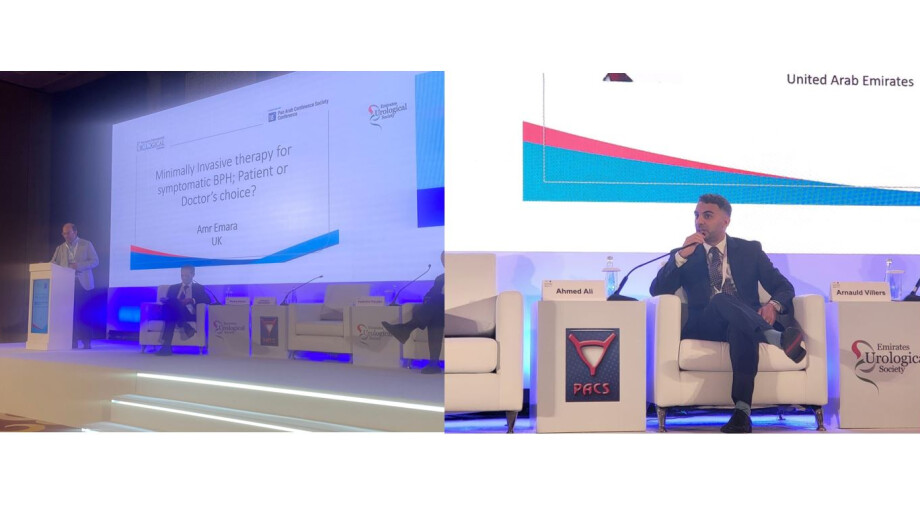
Joining global communities to share Urology expertise
In our latest Blog post, Ahmed Ali and Amr Emara share news on their recent trip to the International Emirates Urological Conference where t...

Why are urinary tract infections more common in women?
In this podcast, Ahmed Ali discusses the causes and symptoms of UTI's and why women suffer more with them.
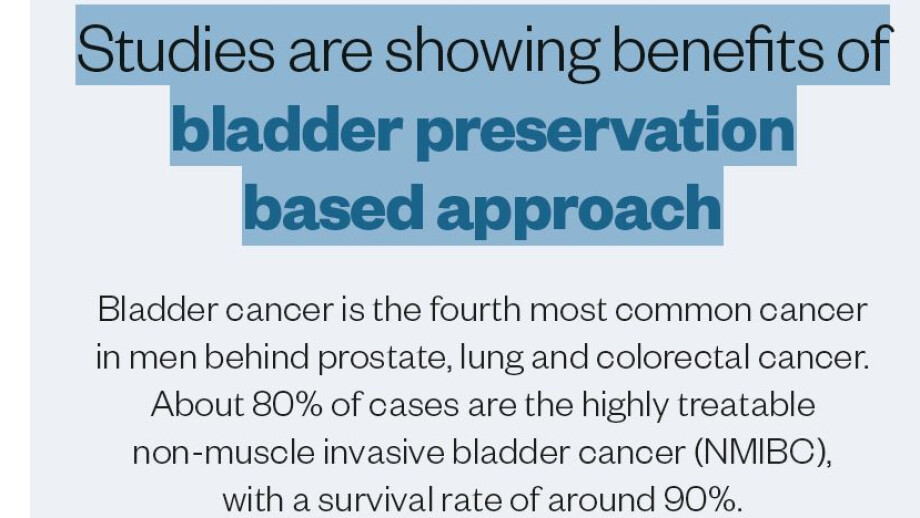
Studies are showing benefits of bladder preservation based approach
Whilst Urological cancers in both the prostate and kidney are highlighted more in media coverage, bladder cancer continues to require consid...
5-year data sustain long-term effectiveness of Aquablation vs TURP in BPH
Read the latest study for Aquablation therapy for BPH and it's efficacy compared to the traditional TURP. Neil Barber had a number of patien...
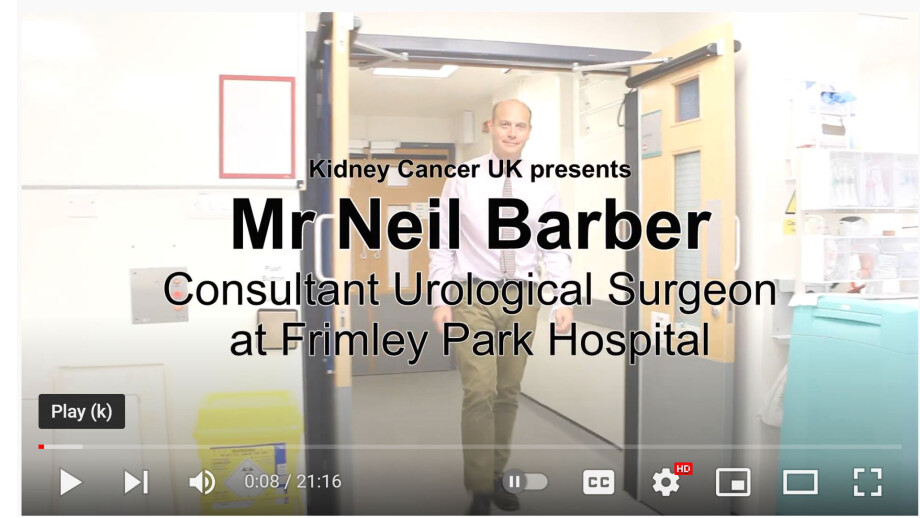
Robotic Assisted Surgery for Kidney Cancer - your questions answered
Kidney Cancer UK produced this video to answer all your questions on robotic assisted kidney surgery. With Frimley Health Foundation Trust b...
SpaceOar treatment for Prostate Cancer patients
Read the latest review of using SpaceOar for patients prior to their prostate cancer treatment. Both Simon Bott and Richard Hindley are able...
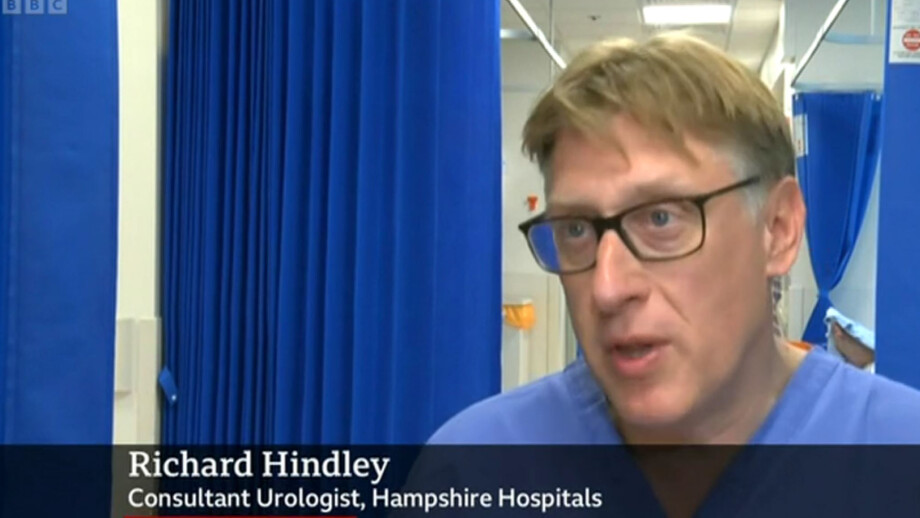
Aquablation extends to Hampshire
Following the successful introduction of Aquablation to Frimley Park Hospital with Neil Barber, Richard Hindley has started trialling the mi...
ReIMAGINE Prostate Cancer Risk Study
Examining the prostate cancer diagnostic pathway and the risk analysis. As we move to a novel MRI and targeted biopsy approach for diagnosti...

Real world outcomes for Study into Rezum treatment for BPH
The latest study into the efficacy of Rezum treatment has produced real world outcomes with regards to retreatment and significant improveme...
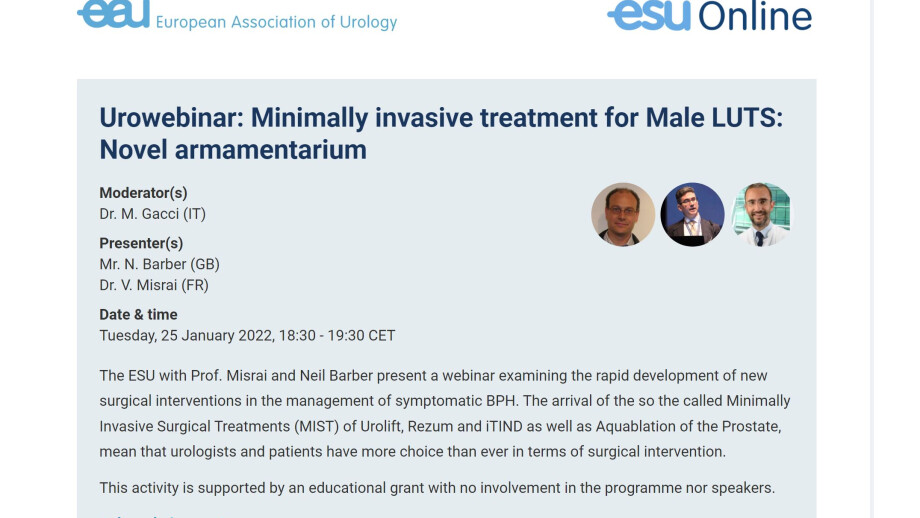
European School of Urology Webinar
Tonight, Neil Barber is presenting on mininally invaise surgery options for treating male LUTs.
Join tonight and gain CME credits.
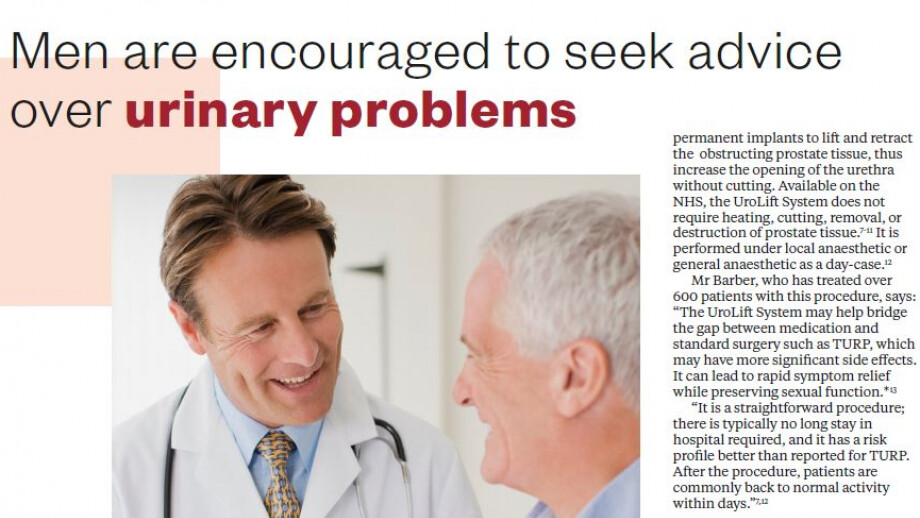
Encourage Men to seek help for their Urological problems
This article featured in The Guardian on 30 November 2021. The awareness of prostate cancer is getting better for men, but the majority of p...
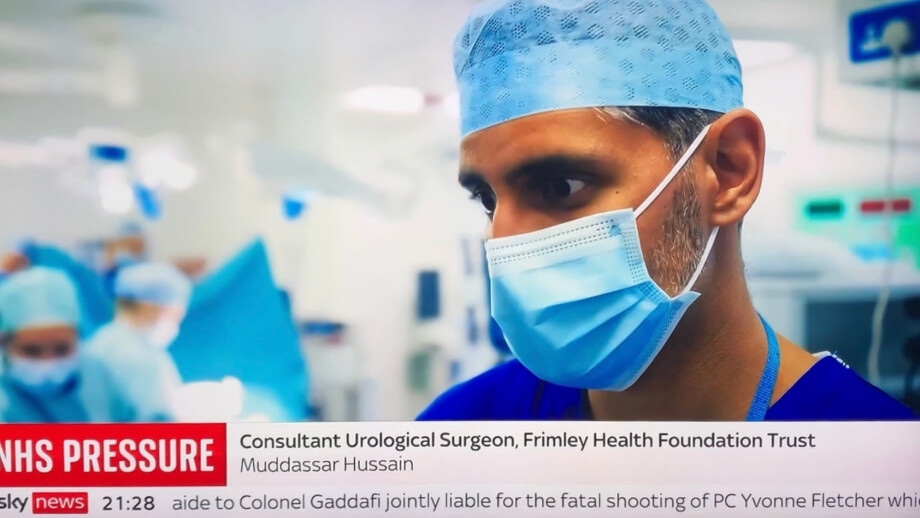
Sky News coverage of robotic kidney surgery
Sky News covered this story on how technology can can ease the burden for the NHS. Muddassar Hussain talks through using robotic kidney sueg...

Review of the latest Minimally Invasive Procedures for treating BPH
Over the past 6 years, the treatment options for men suffering with Benign Prostatic Hyperplasia (BPH) has grown with a number of minimally...
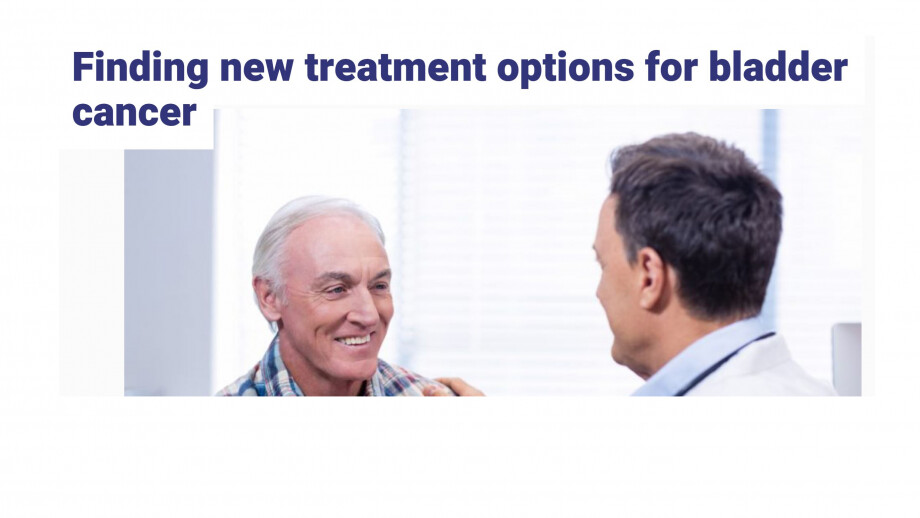
Finding new treatment options for bladder cancer
Having an awareness of symptoms of bladder cancer can make a huge difference to early diagnosis and the type of treatments available to pati...
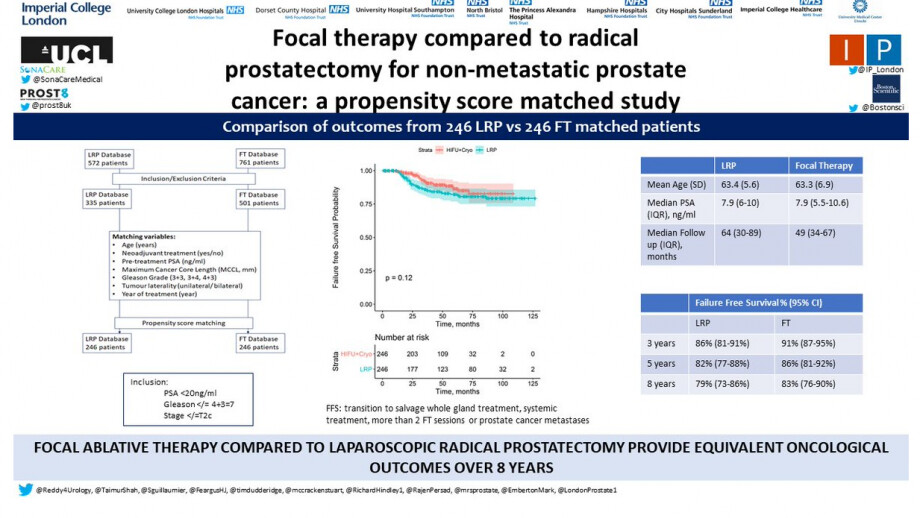
Focal Therapy Studies prove 8 year efficacy compared to prostatectomy
Richard Hindley and Amr Emara were part of the studies team in this research to look at the longer term efficacy of prostate cancer treatmen...

Urology Update - LUTS, overactive bladders and bladder cancer
As part of Movember month, Andrew Chetwood, Muddassar Hussain and Ahmed Ali will be speaking at this BMI virtual event to highlight the late...
Treatments for BPH GP Webinar
HCA Princess Grace Hospital are hosting a webinar for GP's where Richard Hindley will be updating you on the latest developments in BPH trea...

Fusion guided targeted biopsies proven to be most accurate approach for prostate cancer detection compared to non targeted methods
Neil Barber, Simon Bott and Richard Hindley were all involed in this latest study published in the European Urology Oncology Journal. At Uro...

NICE publish medical technologies guidance for Rezum
Following further studies for Rezum treatment for BPH with the Rezum II Study, NICE have published the next steps in their medical technolog...

Patients having Urology procedures during the COVID pandemic remain symptom free
As our team of Urologists try to balance the COVID pandemic with keeping patients treated and safe, the results from Hampshire Hospitals NHS...
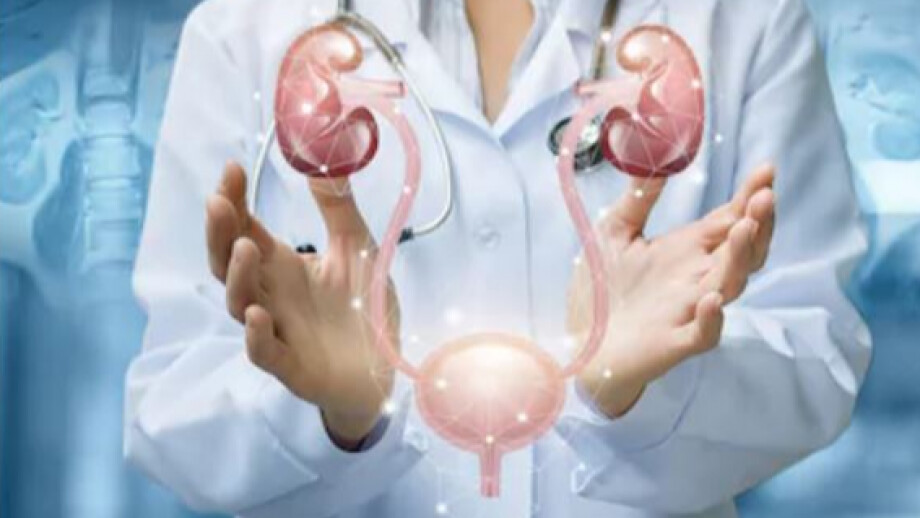
Aquablation - 3 year outcomes of WATER trial prove efficacy and durability similar to TURP
Neil Barber has been leading the trials in the UK for Aquablation thereapy for treating BPH. Many patients from the trials came through Frim...

BPH - Putting the patient first
As BPH treatments have evolved and now enable patients to make their own choice on the procedure which suits them best, this online conferen...
Press coverage